








A patient advocate I spoke with last year had spent four years helping elderly patients navigate the healthcare system in a mid-sized city. She described her job, with some exasperation, as translating between what the healthcare system was designed to do and what patients actually needed it to do. Most of her work involved the spaces between clinical encounters helping patients remember instructions they’d been given verbally, tracking down results from tests ordered at one facility so they could be shared with a provider at another, reminding them about appointments they’d written on paper calendars that had been lost.
She noticed something shifting over the past two years. Not a revolution an accumulation of small changes that individually seemed modest and together were meaningfully reducing the friction she’d spent years working around. A pharmacy app here, a patient portal there, a hospital system that finally had an app worth using. The patients she worked with were still navigating a complex system. It was becoming slightly less impossible to navigate.
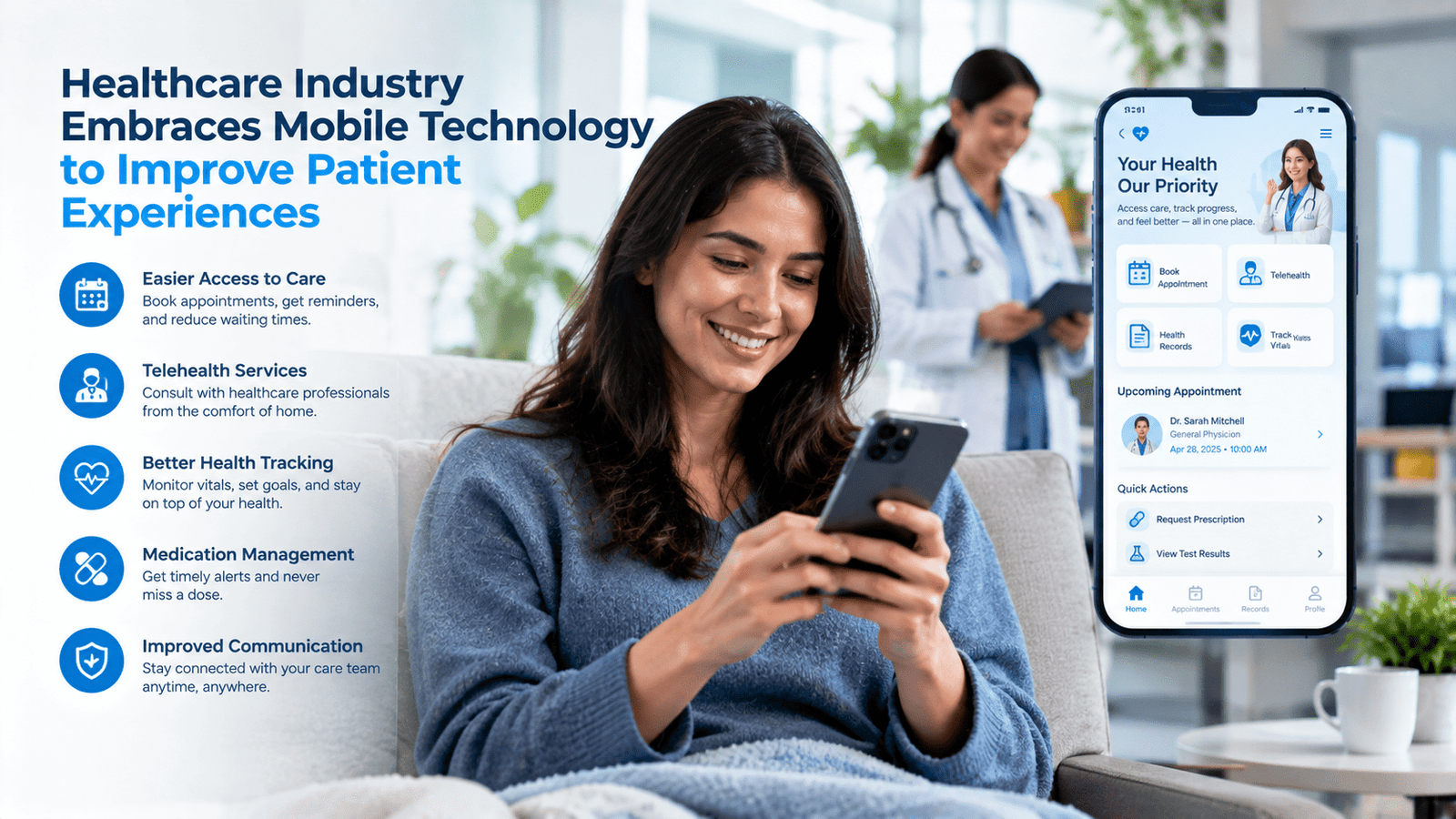
What she was observing is happening across healthcare at different speeds in different settings, driven by patient expectation, competitive pressure, and regulatory encouragement that has made digital patient engagement a strategic priority rather than a peripheral consideration. A capable Healthcare App Development company building in this space is building into a market that’s moving faster than it was three years ago and that still has more room to move than most comparable industries. Here’s how the adoption is actually unfolding across different parts of the healthcare system.
Hospital Systems: From Portals to Genuine Apps
The electronic health record era gave hospitals patient portals web-based systems that technically made medical records accessible and technically allowed appointment scheduling and technically enabled secure messaging. The modifier “technically” is doing a lot of work in that sentence.
Patient portal adoption has historically been low not because patients don’t want access to their health information, but because the portals were built for regulatory compliance rather than for patient use. Confusing interfaces, login friction that required password resets more often than anyone should need, and functionality that duplicated phone interactions without improving on them produced tools that patients created accounts for and rarely returned to.
Hospital systems that have invested in genuine mobile apps native experiences built around patient workflows rather than adapted from desktop portals have seen engagement rates that demonstrate the demand was always there. The patient who wouldn’t log into a browser-based portal will often engage with a well-designed app because the interaction model matches how they use their phone for everything else in their lives. Check-in flows that replace clipboard paperwork. Wayfinding within large hospital campuses that reduces the stress of navigating an unfamiliar building for the first time. Real-time surgery status updates for waiting family members who otherwise have no information except what a staff member has time to provide.
Primary Care: The Communication Gap Closing
Primary care has operated under a communication model that hasn’t changed much in decades. Office visit, discharge with written instructions that may or may not be followed, phone call if something comes up, return visit for follow-up. The gaps between these touchpoints are where patient questions go unasked, where early signs of deterioration go unreported, and where the continuity of care that primary care is supposed to provide gets interrupted.
Mobile apps specifically designed for primary care communication not generic messaging platforms but tools that integrate with the clinical record, route messages to appropriate team members, and create documented communication trails are closing that gap in practices that have invested in them. A patient with a question about a medication three days after an appointment who can send a message and receive a response from the care team within a few hours is having a fundamentally different experience of primary care than one who calls, navigates a phone tree, leaves a voicemail, and waits for a callback.
The chronic disease management application within primary care is where mobile technology has produced the most consistent evidence of improved outcomes. Patients managing hypertension, diabetes, and heart failure through apps that support medication adherence, symptom tracking, and care team communication show measurably better clinical markers than comparable populations managing without these tools. The improvement isn’t from the technology being sophisticated it’s from continuous support replacing the vacuum between quarterly appointments.
Specialty Care: Condition-Specific Applications
Specialty medicine has developed mobile tools that are more condition-specific and in some cases more clinically rigorous than the general-purpose patient engagement tools that hospitals and primary care practices have adopted.
Oncology has seen significant mobile investment in symptom monitoring and patient-reported outcomes apps that prompt cancer patients to report symptoms and side effects between visits, generating data that informs treatment decisions and flags deterioration that might otherwise go unreported until the next scheduled appointment. The clinical evidence supporting PRO collection in oncology is strong enough that major cancer centers have made it a standard of care consideration.
Cardiology remote monitoring has moved from an early-adopter curiosity to clinical standard practice in cardiac rehabilitation and post-discharge heart failure management. The patient who leaves a hospital after a cardiac event with a remote monitoring protocol daily weight tracking, blood pressure logging, symptom reporting and whose data is actively reviewed by the care team has meaningfully lower thirty-day readmission rates than the patient with equivalent clinical care and no remote monitoring. The numbers are significant enough to have influenced hospital quality metrics and reimbursement models.
Dermatology has adopted mobile in a direction specific to its clinical workflow teledermatology apps that allow patients to submit photos of skin concerns for asynchronous review by a dermatologist, either resolving the concern remotely or triaging to an in-person appointment when needed. For a specialty with chronic demand exceeding supply, this creates access that wasn’t previously possible for the subset of presentations that don’t require in-person examination.
Mental Health: Meeting Patients Where They Are
Mental health mobile technology has grown faster than almost any other healthcare category over the past three years, driven by demand that the traditional mental health system’s capacity can’t meet and by a population that is increasingly comfortable accessing mental health support through digital channels.
The quality of what’s available varies more in mental health than in other healthcare mobile categories, ranging from apps with genuine clinical validation and regulatory oversight to wellness applications that use clinical-adjacent language without clinical substance behind it. Navigating this variation is one of the more important practical challenges for patients and clinicians trying to incorporate mobile tools into mental health care.
The apps making genuine clinical contributions in mental health tend to share a few characteristics. Connection to licensed providers rather than purely self-directed use, which maintains the human clinical relationship that research consistently shows is central to mental health outcomes. Validated assessment tools rather than proprietary mood metrics that can’t be compared to clinical literature. Data privacy practices that reflect the sensitivity of mental health information rather than general consumer app standards.
Eldercare: The Adoption Curve Worth Watching
Older adult populations have historically been underserved by digital health technology, partly because adoption assumptions have led designers to default to interfaces calibrated for younger users and partly because the specific accessibility needs of older users larger text, simpler navigation, voice interaction support haven’t been treated as design requirements in most health apps.
This is changing, more slowly than other segments but observably. Voice-first health apps that allow older adults to log symptoms, receive medication reminders, and communicate with care teams without touchscreen interaction are addressing the adoption barrier that touchscreen-primary interfaces create. Family-connected monitoring tools that give adult children visibility into an elderly parent’s health indicators while preserving the parent’s autonomy are addressing the care coordination challenge that eldercare consistently presents.
The organizations that have specifically designed for older adult usability rather than adapting general-population interfaces report adoption rates that challenge the assumption that this population won’t engage with mobile health technology. The assumption was largely about design rather than about the population.
Finding the Right Partner for Healthcare Mobile Work
When organizations are working through how to choose the right healthcare app development company for their specific context, the answer differs meaningfully across these healthcare settings. A hospital system building a patient engagement platform needs a partner with deep integration experience with major EHR vendors and familiarity with healthcare privacy requirements that affect every architectural decision. A specialty practice building a condition-specific tool needs domain knowledge that a general mobile development firm typically doesn’t carry. A mental health platform needs clinical input woven into the design process in ways that most app development processes aren’t set up to accommodate.
The common thread is specificity. Generic mobile development expertise applied to healthcare without the domain knowledge that healthcare requires produces tools that are technically functional and clinically inadequate. The adoption curve across healthcare categories has been slower than the technology would suggest because too much early investment went into this direction functional tools that didn’t serve clinical workflows or patient needs specifically enough to sustain engagement.
What the Patient Advocate Noticed at the End of Her Four Years
She changed roles recently moved to a policy position where she works on the systemic issues rather than the individual navigation cases. She said the thing that made her feel the role was becoming less urgent wasn’t any single technology. It was noticing that the patients she’d worked with were asking her for less help with the spaces between visits.
Not no help. Less. The friction was still there. It was becoming slightly less impossible to navigate.
That’s the honest measure of where the healthcare industry is in its mobile adoption. Not transformed improving. The gap between what patients need between appointments and what the system provides is narrower than it was, in ways that are accumulating across hospital systems, primary care practices, specialty medicine, mental health, and eldercare simultaneously.
The patient advocate’s job still exists. It’s just slightly less urgent than it was. That’s real progress, even if it’s not the transformation the most ambitious projections imagined.