









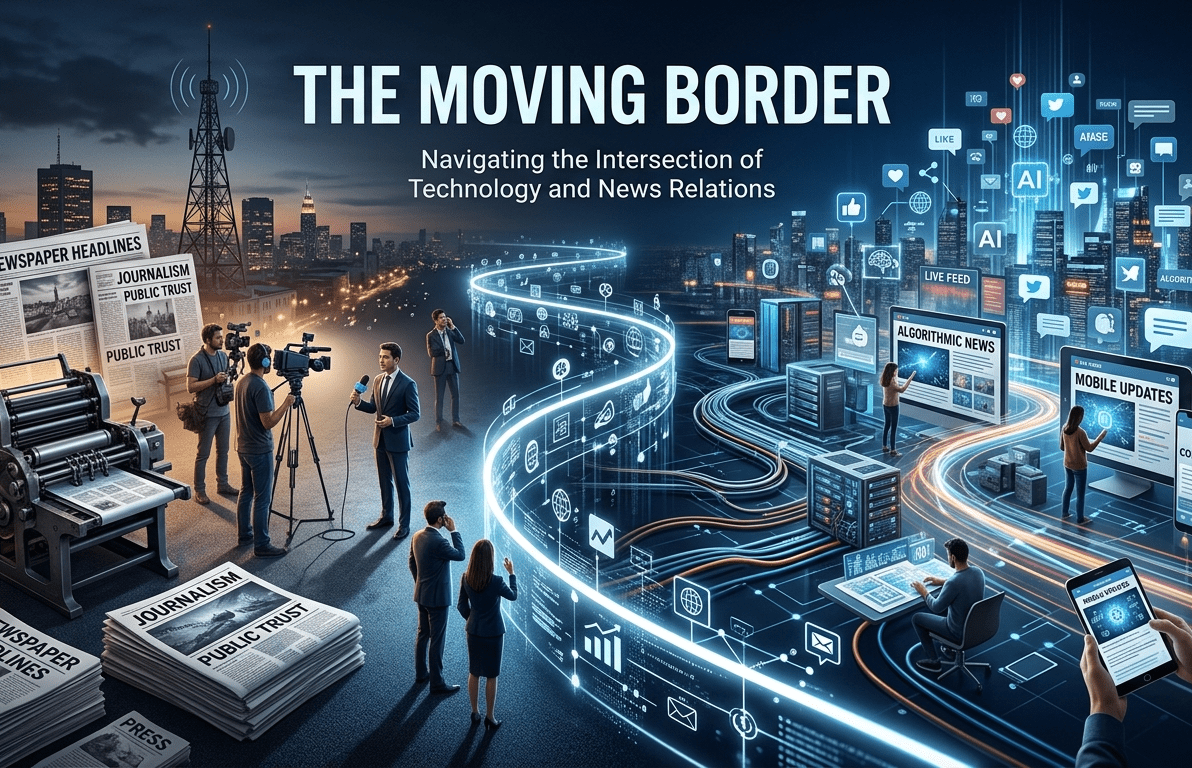
The traditional morning routine used to be simple: pick up the physical newspaper from the porch or skim a curated homepage. Today, that experience is entirely personalized. We query AI assistants for real-time summaries, scroll through personality-driven video essays on our phones, or listen to synthetic voices read deeply reported investigative journalism during our commutes.
The relationship between technology and the news industry is no longer about simple distribution. It is a fundamental, structurally complex transformation affecting how truth is uncovered, funded, and consumed. For media institutions, entrepreneurs, and digital strategists, understanding this dynamic is essential to navigating the future of global information.
1. The Death of the Traditional Article Format
The most significant shift in media consumption is the transition from a destination-based internet to an Answer Economy. Audiences are increasingly bypassing publisher homepages entirely, relying on AI search platforms and device-level assistants to synthesize information.
According to data from the Reuters Institute, global publishers project a 40% decline in traditional search engine referral traffic over the next three years.
This shift moves media organizations from an era of “AI in Media” (using tools to write articles) to “Media in AI” (ensuring content is structured well enough to be discovered and accurately cited inside conversational AI ecosystems). Success is no longer measured purely by page views or clicks, but by systemic authority and information integration.
2. The Rise of “Breaking Verification” over Breaking News
Because generative technology makes it cheap and easy to mass-produce generic content, the internet faces a massive influx of low-quality, automated text. Consequently, speed has lost its competitive edge. An AI can summarize a corporate earnings report or a sports box score in fractions of a second. As a result, the primary value proposition of modern journalism has flipped:
Old Media Paradigm (Speed) | New Media Paradigm (Trust) |
First to report the event | First, to verify the facts |
High-volume, commoditized summaries | Deep contextual analysis and framing |
Algorithmic distribution (SEO hacking) | Direct audience relationships (Newsletters, Apps) |
The industry’s focus is shifting toward Breaking Verification. In an information landscape prone to deepfakes and coordinated misinformation, the public looks to credible, accountable institutions to confirm what is authentic. Publishers are strategically shifting resources away from general news and doubling down on areas that technology cannot easily commoditize: original, boots-on-the-ground investigative reporting, contextual analysis, and human-interest storytelling.
3. The Creator Squeeze and Personality-Led Media
Technology has democratized distribution, allowing individual creators and subject-matter experts to build lean, highly profitable media operations. Younger audiences, in particular, show a strong preference for personality-led, authentic content over institutional branding.
[Traditional Media Institution] (Decline in trust/reach) [Audience Fragmentation]
[Independent Creator Infrastructure] (Video/Audio Engagement)
This structural shift presents a clear choice for legacy media: compete, collaborate, or co-opt. Modern newsrooms are responding by encouraging their top editorial talent to develop distinct public personas, launching vertical video initiatives, and shifting distribution strategies heavily toward video and audio platforms like YouTube and specialized podcast networks.
4. Inside the Modern Tech-Driven Newsroom
Behind the scenes, technology serves as an operational foundation rather than just a publishing tool. Forward-thinking media companies are redesigning their entire workflow around automated efficiencies to free up human journalists for high-value work.
Ingestion & Pattern Recognition
Automated Ingest
1. Ingestion & Pattern Recognition: Automated Ingest.
Advanced data systems scan millions of public records, financial filings, and global communication feeds to flag anomalies or emerging trends that a human researcher might overlook.
2. AI-Assisted Research & Translation: Production Efficiency.
Machine learning tools translate multi-language archives instantly and cross-reference background documentation, compressing weeks of discovery into hours.
3. Human Verification & Ethical Oversight: The Editorial Core.
Journalists verify sources, perform live interviews, provide ethical framing, and ensure the narrative contains the nuance required for complex public reporting.
4. Liquid Formatting & Distribution: Multi-Platform Delivery.
Once verified, a single core story is automatically optimized into multiple formats—a text brief for executive newsletters, a high-fidelity synthesized audio track for commuters, and a script outline for visual platforms.
The Strategic Path Forward
For businesses, media professionals, and digital leaders, the evolution of technology and news relations demands a shift in strategy. Thriving in this environment requires building deep, direct-to-consumer relationships through premium subscriptions, highly targeted niche newsletters, and experiential live events.
By prioritizing original reporting, verifiable expertise, and an adaptable approach to platform delivery, organizations can successfully transition from legacy distribution models into active participants in the new information economy.