





Ever walked into an office, event, or campus and instantly knew who belonged there, just by a glance at an ID card?
That tiny card clipped to a lanyard does a lot more work than we realise. It silently says, “Yes, I’m supposed to be here.“ But how do those simple-looking cards actually come to life?
Printing ID cards, badges, and credentials might sound like a technical task, but at its core, it is about people. It is about helping employees feel official on day one, making event check-ins smoother, and keeping workplaces secure without awkward questions.
So, if you have ever wondered what goes into printing a professional-looking ID card or if you are planning to create your own, this guide is for you.
What should an ID card include?
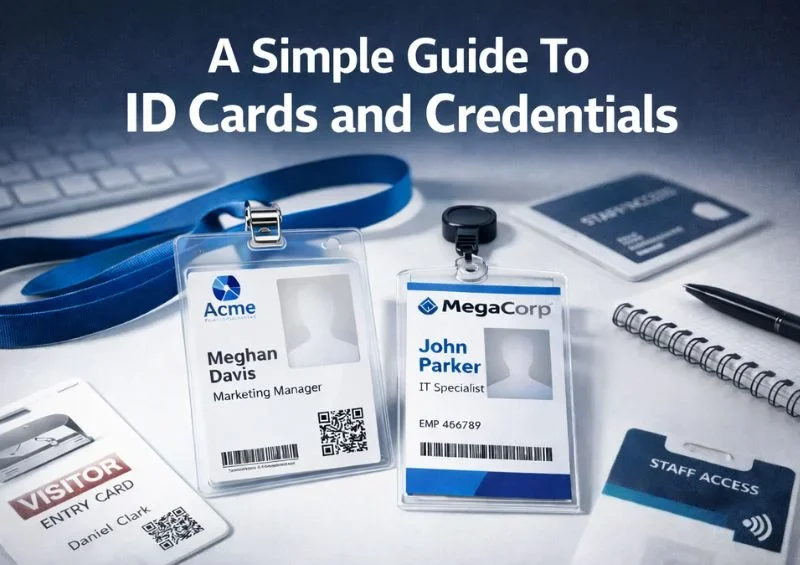
A clear photo, name, role, or ID number, and organisation logo, or must-haves. Optional elements like colour codes or icons can make identification even faster.
Which planning method works best?
Small teams can rely on basic card printers for quick results. For frequent or long-term use, professional PVC printing offers better quality and durability.
And how do you balance design, durability, and security without overcomplicating things?
Stick to a clean, readable design and strong materials. Add simple security features like barcodes or QR codes to stay protected without complexity.
Turning questions into clear cards
An effective ID card starts with the essentials, because clarity always comes first. These basics make identification quick and effortless, whether it is a new employee entering the office or a guest checking in at an event. Adding subtle details, like colour codes or icons, can further help distinguish departments or access levels without overcrowding the design.
When it comes to printing methods, simplicity usually wins. For small teams or short-term projects, basic card printers efficiently meet the job’s requirements quickly and cost-effectively.
Larger organisations often benefit from PVC cards and professional printers that offer sharper images and better durability for long-term use. The goal is to match the method to how often the card will be used and how long it needs to last.
Balancing design, durability, and security doesn’t have to be complicated. A clean layout keeps the card readable, sturdy materials ensure it survives daily wear, and simple security features like barcodes or QR codes add protection without extra hassle. When these elements work together, your ID cards work smarter.
Types of ID cards you will commonly see everywhere
Not all ID cards serve the same purpose, and that is where things get interesting. Employee ID cards are the everyday heroes of offices, helping with attendance, access control, and even cashless payments in some workplaces.
Student ID cards go a step further, doubling as library passes, exam credentials, and campus access keys. Then there are event badges, temporary, bold, and designed to make networking easier at a glance.
Membership cards, visitor passes, and access credentials each play their own role, too. Some are meant to last years, others just a day. Understanding why you need an ID card helps decide how it should look, feel, and function.
Choosing the right material makes a bigger difference than you think
Paper badges might work for short events, but let’s be honest, they don’t survive much. For everyday use, PVC cards are the go-to choice because they are sturdy, water-resistant, and professional-looking. If your cards are swiped, tapped, or worn daily, durability is non-negotiable.
Laminated or coated cards add an extra layer of protection and keep designs from fading. The rule is simple: the more your card is handled, the stronger the material should be.
Designing an ID card people actually like wearing
A good ID card isn’t cluttered, but confident. Clean fonts, readable texts, and balanced spacing make all the difference. And lanyard printing in Ireland understands the assignment very well.
Your logo should be visible without overpowering the card, and the photo should be clear enough to identify someone instantly.
Colour choices can also do a lot of heavy lifting. Different colours for departments, access levels, or roles make identification quicker and more intuitive. When design is done right, the card feels intentional, not like an afterthought.
Simple security features that go a long way
Security doesn’t have to feel intimidating or expensive. Barcodes and QR codes are easy to add and can link to databases, attendance systems, or access controls. For higher-security environments, magnetic stripes or RFID chips offer an extra layer of protection.
The key is choosing features that fit your actual needs. Overloading a simple visitor badge with advanced tech just creates confusion. Smart security is about being practical, not flashy.
Printing in-house vs. outsourcing: What is smarter?
If you issue cards regularly, having an in-house printer gives you speed and flexibility. New hire? Lost card? You are covered instantly. For large batches or premium finishes, outsourcing can save time and ensure consistent quality.
Many organisations use a hybrid approach, basic printing in-house and specialised jobs handled by a professional. It is not about choosing one forever, but choosing what works best for each situation.
The real goal behind every ID card
At its core, a custom ID card isn’t just about identification, but more about confidence and clarity. It reassures employees, students, or visitors that they belong, while helping others instantly understand who’s who without awkward questions or interruptions.
Beyond that, a well-designed ID card supports smoother operations and stronger security. It controls access, simplifies daily processes, and reflects your organisation’s professionalism in a quiet but powerful way. When an ID card does its job right, it goes almost unnoticed, and that’s exactly the goal.
Ending thoughts
Printing ID cards, badges, and credentials may seem like a small task, but its impact is anything but small. From creating a sense of belonging to improving security and everyday efficiency, a well-thought-out ID card quietly supports how people move, work, and interact.
When you focus on clarity, smart printing choices, and simple yet effective design, the process becomes easy, and the results feel professional and purposeful. In the end, the best ID cards are trusted, relied on, and seamlessly woven into daily life.