










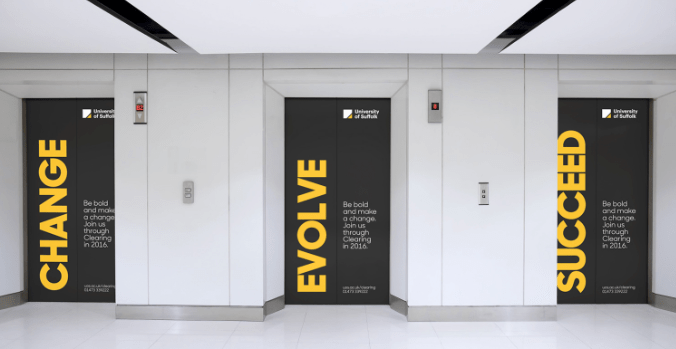
The modern city is fast-moving, yet there is one place where people stop for a moment without distraction. That pause has become an effective communication space, and that is where elevator branding becomes influential. People get into a lift stand for a moment or two, and during this time they become more receptive to messages staring them in the face. This is a natural setting for attention, and that attention is at the root of why this form of advertising works so well.
How Enclosed Spaces Influence Focus
The closed environment inside an elevator gently removes outside noise and visual overload. With limited things to look at, the human mind focuses naturally on the surroundings. Advertisers thereby benefit because the message becomes the most prominent element in the space. People do not feel rushed or distracted, so even simple visuals or short lines become memorable. This controlled environment makes the viewer stay with the message until it reaches the next floor; hence, the branding settles in the mind.
Why Short Exposure Still Has High Impact
While elevator rides are brief, they are repetitive, particularly in daily routines. Such repetition creates familiarity in gentle ways. Human psychology is pretty strong towards repetition, especially when it is not perceived as being forced. The design and positioning of the display encourage natural viewing without interruption. Repeated exposure, over time, works much like gentle reinforcement to help people remember the message long after they’ve stepped out. This is perhaps why several brands consider these few seconds a potent tool of communication.
Creating Connection Through Everyday Moments
People understand elevator spaces as part of their daily route, and messages there blend well into life. That makes it feel not so much like advertisements but just another part of the surroundings. When something fits into the flow, the mind absorbs it faster. It is a moment advertisers capitalize on to build trust since the viewer does not feel under pressure or overwhelmed. The everyday setup assists in making the message relatable and easy to remember, thus solidifying the effect.
How Visual Design Enhances Recall
The small, limited space pushes advertisers to use simple and clean visuals. This is effective because the human brain absorbs clear images faster than complex ones. Strong colors, short lines, and neat spacing help keep the message sharp in memory. In this confined setting, even minimal design looks bold, thereby making the viewer focus on the most important part of the message. This clarity thus plays a major role in long-term recall.
Understanding Value Beyond Duration
Most businesses compare lift media to bigger outdoor formats, especially when strategizing for budgets or assessing variables like escalator advertising cost. What they find out is that the value of elevator media lies not in size or loudness but in direct attention. People aren’t walking, driving, or multitasking while they are viewing these ads. This undivided attention gives the message strength that often outshines longer-duration formats placed in busy surroundings.
In conclusion, the psychological basis of captive-audience environments explains why elevator ads have become a powerful communication format. In a world filled with noise and movement, these quiet enclosed moments create rare attention, turning simple visuals into lasting impressions.