









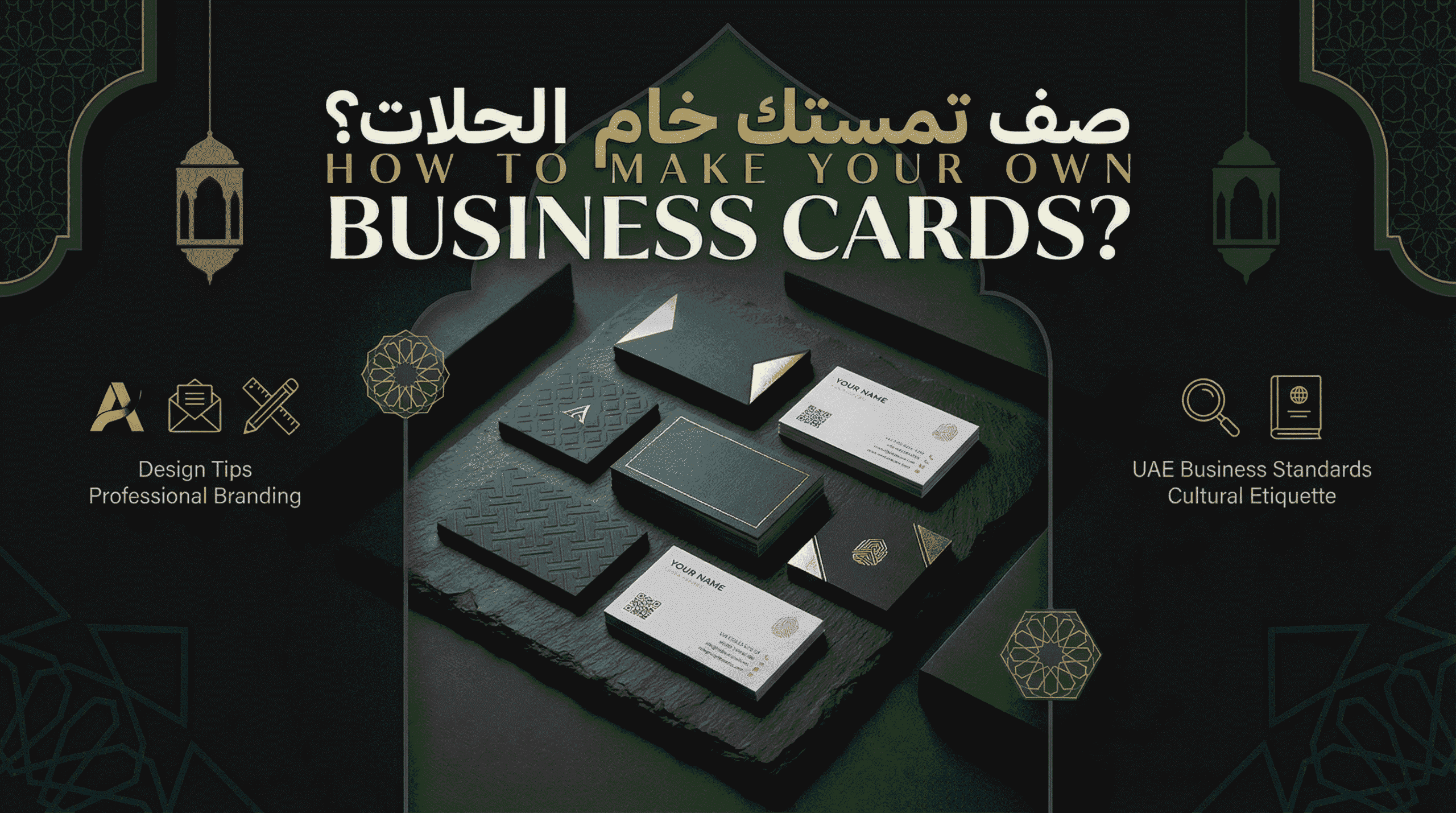
Your business cards can make or break your deals since they’re the first impression you make on your clients and audience. Whether you’re networking, meeting with a client, or having a casual encounter with someone, sliding a business card always helps continue important conversations. But that would only happen if that card is made to perfection.
A well-designed card is no longer about sharing your contact information on a piece of paper; it does more than that. You can share your personality, futuristic mindset, and expertise. If that card holds such importance, why leave it to local vendors with no expertise?
By designing and printing your own business cards, you take complete control over the customization process. You can decide everything from the dimensions to the texture of the final product.
In this blog, we’ll walk you through the path that helps you make your own business cards and empowers you to take charge of the creative process.
Your Roadmap to a Standout Business Card
Think of your business card as a mini marketing tool that works 24/7 for you. If you want to work in your favor even more, customize it yourself. You’ve got two options: the first is to hire one of the most reputable printing companies in Dubai, and the other is to do it yourself.
In this blog, we are empowering you to take a step forward and make your own business card without any professional assistance. Follow this roadmap, and you’ll end up with an amazing personality on the card.
Plan → Design → Paper & Finish → Tools → Print → Review → Distribute
Step 1: Identify Your Goals and Audience
You might think that the first step is to design, but in actuality, you’ve got to do more before getting started. Keep your mind clear of who your audience is. Ask yourself why you need a business card and who will be receiving it. Is it for an event only or regular use? Do you want to use it to connect with people, or just share your contact info?
Knowing the answers to all such questions ensures your business card is made with the right intention and works every time. The same thing goes for understanding your audience. You must know what they want to know about you.
Step 2: Pick the Perfect Size and Shape
Your card’s dimensions and shape are the first things people notice, even before they read the details. So, ignoring it takes you far from professional success. You must choose the right size and shape.
If you’re a beginner, going for the standard size is recommended. The classic 3.5×2 inches is the most popular choice and convenient to keep in your wallet or slide into someone’s hand. However, you can go for any size to show your creative side.
Try to experiment with shapes as well, as rectangular ones are pretty common. Although there’s nothing wrong with the classic shape, choosing something out of the box can make you memorable. Go for square, rectangular shapes with rounded or typical sharp corners.
Comparison of Business Card Sizes and Shapes
| Card Type | Dimensions |
| Standard | 3.5 x 2 in |
| Square | 2.5 x 2.5 in |
| Rounded Corners | 3.5 x 2 in |
| Mini | 3 x 1 in |
Step 3: Nail the Design Essentials
The way your card looks is everything. You must design it really well so that it communicates your values and expertise at a glance. Always start with the most needed details, like your name, job title, company logo, and contact information.
Don’t forget to add a tagline and a short description that gives insights about what you do or how you can help. Now, shift your focus to the fonts and color side. Choose simple fonts and professional colors.
When it comes to the layout, anything that is minimalistic and clutter-free is a good option.
Step 4: Choose Paper Type and Finish
How your cards feel in your hand can influence the way you’re perceived. This is why choosing the paper type and finish matters. Pick a sturdy material that isn’t flimsy to touch. Premium and heavyweight papers are always a great choice to go for.
You can give your card a special appearance by picking a unique texture. From embossing, spot UV, and oil stamping, pick the one that aligns with your purpose. Whether matte or glossy, both give an outstanding outlook to your business cards.
Step 5: Use Reliable Design Tools
Till now, you were just picking the best options for your cards. But now it’s time to bring the design to reality. The right and reliable design tools can help you make your own business card.
If you’re a beginner, we encourage you to stick with basic platforms like Canva or Vistaprint. That is because it offers ready-made templates that you can instantly customize.
However, if you hold any prior experience working with tools like Adobe Illustrator or Photoshop, that’s your way to go.
The idea is to choose a tool according to your expertise, convenience, and the results you’re expecting.
Step 6: Print Your Cards Like a Pro
Once you’re done with your design, the next phase is to print them out in the best format. If you choose to print at home, go for a smaller quantity. Only if you plan to use it casually, then it’s an ideal way. Otherwise, it is recommended to hire a business card printing Dubai for much better results. Hiring a professional ensures the quality isn’t compromised.
Always give a high-resolution file to print out your cards because you can’t risk having a pixelated one. Invest in quality printing to avoid inconveniences like ink bleed and blurred prints.
Step 7: Review, Proofread, and Perfect
Nobody wants to read a business card with typos. So before printing, don’t forget to review the design one last time and proofread the content. Check if your contact details are right and watch out for any blunders.
Always take assistance from your colleagues because they can catch flaws that you may overlook. Even the slightest typo can raise questions over your credibility, so take your time to refine your cards.
| Common Mistakes to Avoid |
| Overcrowded Layout |
| Poor Color Contrast |
| Low-Quality Images |
| Typos and Errors |
Step 8: Share Your Cards Effectively
Got your cards and thinking, what’s next? Having a business card is only useful if you share it with the right people. You don’t know who you’re going to run into and in what event. So, it’s a great idea to keep a few on you at all times.
Look for opportunities and casually take your work chit-chats to a professional call by sliding your card to the audience. You can also include them in giveaways, packages, or thank-you notes.
Frequently Asked Questions
- How many business cards should I print at once?
Always go for at least 100 to 200 cards to ensure you don’t run out of them early. This quantity would be enough for a more social person to have a stock of a few months. - Can I make professional-looking business cards on a budget?
Of course! Try using free templates and DIY options, which can help you save a lot. Also, pick standard paper options to save some money without reducing the quality. - What design mistakes should I avoid?
Just by avoiding text-heavy layouts, unreadable fonts, low-visibility contrast, clutter, and low-resolution logos, you can save yourself from embarrassment.
Wrapping Up
Let’s cut to the chase: to make your own business card, your attention to detail must be top-notch. Even if you don’t have one, following the steps will help you stay on track to creating an incredible product. Take care of the design and printing aspects discussed above, and you’ll build yourself some high-quality and professional cards that elevate your networking game.