










Written By: Mahnoor Fatima
Book Review “Sulphite” by Noor Rajpoot: The Chemistry of Hidden Pain
The Symbolism of Emotional Preservation
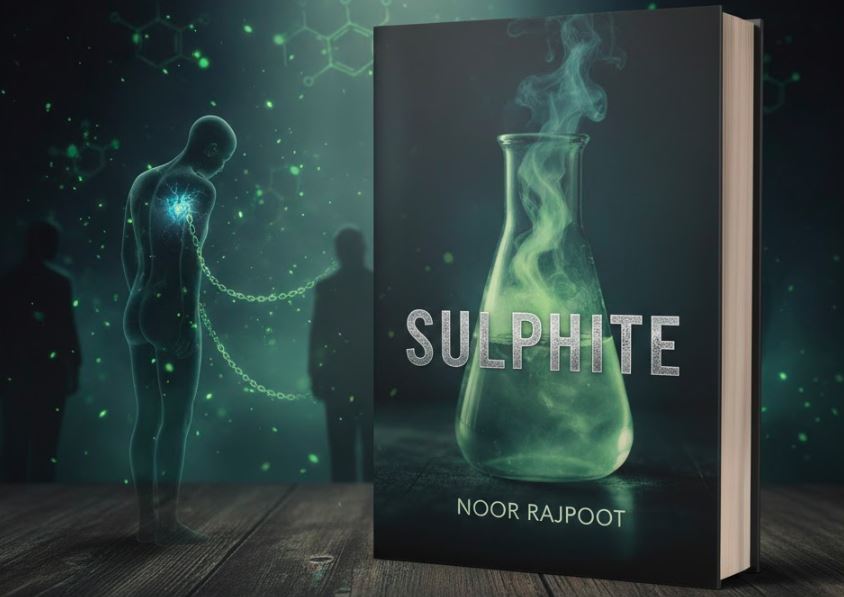
The novel Sulphite by Noor Rajpoot is a thought-provoking and emotionally intense literary work that explores the hidden bitterness of human relationships, inner conflicts, and the silent suffering that people often carry within themselves. Just like sulphite in chemistry—which preserves food but can also cause harm if used excessively—the title symbolically represents emotions, memories, and relationships that seem harmless on the surface but slowly become toxic over time. The novel presents a deep reflection on human psychology, societal pressure, and emotional survival.
Themes of Toxicity and Resilience
One of the strongest aspects of Sulphite is its powerful theme. The author highlights how unresolved pain, suppressed emotions, and unhealthy attachments can slowly poison a person’s mental and emotional well-being. Noor Rajpoot skillfully uses symbolism to show how people often accept emotional suffering in the name of love, loyalty, or social norms, without realising its long-term consequences. This makes the novel highly relatable, especially for readers who have experienced emotional neglect or inner struggles.
Realism in Character Development
The characters in Sulphite are realistically drawn and emotionally complex. The protagonist is not portrayed as a perfect individual but as a deeply human character filled with doubts, fears, and emotional wounds. This realism allows readers to connect with the character on a personal level. The emotional journey of the protagonist reflects the inner battles many people fight silently in their everyday lives. Supporting characters also play a significant role in shaping the story, representing different attitudes of society—some supportive, some indifferent, and others emotionally damaging.
Impactful Writing Style
Noor Rajpoot’s writing style is simple yet impactful. She avoids unnecessary complexity and instead focuses on emotional depth and clarity. Her language flows naturally, making the novel easy to read while still carrying strong emotional weight. The author uses descriptive narration to portray feelings rather than relying heavily on dramatic events. This subtle storytelling approach makes the pain and emotional tension feel more real and believable.
The Cost of Emotional Suppression
Another important theme addressed in Sulphite is emotional suppression. The novel sheds light on how people are often taught to hide their emotions to appear strong or acceptable in society. The author criticises this mindset by showing how suppressed emotions do not disappear; instead, they slowly build up and damage mental peace. Through the protagonist’s experiences, the reader learns that emotional honesty is essential for healing and personal growth.
Societal Expectations vs. Individual Identity
The novel also touches upon social expectations and their impact on individual identity. Characters in Sulphite are often trapped between what they feel and what society expects from them. This conflict creates emotional pressure and confusion, leading to self-doubt and inner turmoil. Noor Rajpoot effectively highlights how social norms can silently control personal choices, especially in matters of relationships, emotions, and self-expression.
Final Words: A Literary Mirror for the Modern Soul
In conclusion, Sulphite by Noor Rajpoot stands as a profound exploration of the human condition that lingers in the mind long after the final chapter. The book succeeds not just as a story, but as a psychological study of the “preservatives” we use in our own lives—the excuses we make and the silence we maintain to keep our world from falling apart. Noor Rajpoot challenges the reader to confront the “sulphites” in their own relationships, asking at what point preservation turns into poison.
For anyone navigating the complexities of modern social dynamics or battling the invisible weight of past trauma, this novel offers a sense of validation and a path toward emotional transparency. It is a must-read for those who appreciate literature that prioritises the internal landscape over external spectacle. Ultimately, Noor Rajpoot reminds us that while truth can be bitter, it is the only ingredient that can truly cleanse the soul and allow for genuine, untainted healing. Read More Book Reviews