A Comprehensive Guide on Brochure Printing and Design: Sizes and Folding Options
Even in this digital era, brochures continue to stay as one of the most effective marketing means for businesses of all sizes, NGOs, events, and creative professionals. Whether being displayed at the reception kiosk, handed out at an event, or directly mailed to the clients, a well-designed brochure conveys your message professionally and fast. To receive an outstanding final product, you have to understand the fundamentals of brochure Printing and Designing, the most common size for brochures, and above all, how to choose the right and affordable brochure printing services without sacrificing quality.
Brochures Are Relevant for Marketing
In spite of the surge in digital marketing, brochures still manage to offer a physical and credibility-enhancing method to share your data. Your prospects can touch and hold them, flip through, and refer back if found beneficial. With online ads, your customers can’t replicate or reciprocate. Brochures are also good at offering structured data like product/service details, maps, pricing, listing, and top above all, step-by-step guidance. While associated with a meaningful design and professional printing, brochures represent your brand value, clarity, and customer experience.
Main Things of Effective Brochure Design and Print
A well-crafted brochure can strike a good balance between aesthetic appeal and ease of navigation and reading. Here are the most elementary elements to take care of.
- A purpose: Understand your goal at the onset. What do you want your brochures to do? Do you want them to share information? Do you want them to sell anything or attract event guests? The purpose defines the amount of content you should include as well as the structure of the layout. The purpose should be clear.
- Cover and headline: The Cover of the brochure is the first thing your customer will see. High-resolution images with a concise headline would compel the readers to open the brochure and go through it.
- High-resolution images and graphics: There’s hardly anything that can reduce the credibility of pixelated photographs. Don’t forget to use high-resolution images and steady brand elements like patterns, icons, and color blocks.
- Simple-to-scan layout: You must use columns, small paragraphs, bullet points, and enough white space so that the clients can explore and digest your data. Keep things simple because simplicity sells.
- Professional quality printing: Even the best design can look dull and unappealing if the printing quality is poor. Durable paper choice, clear folding, and crisp use of ink can add value and durability to your Brochure Printing.
Know the Most Common Size for a Brochure
Choosing the right size for a brochure is so important. It remarkably influences readability, layout, design, and printing price. Here are the most commonly used brochure sizes.
- Letter-size brochures: This is the most common size in the United States. This is perfect for trifold and z-fold stuff. This works well for general business purposes. Letter-size brochures are cost-effective and supported by almost all printers.
- Legal-size brochures: The brochures provide more space to accommodate your content. Since they provide more space, you can use them for product listings, travel itineraries, descriptions, and menus. They are good for trifold and accordion fold.
- Tabloid-size brochures: It’s a premium size for a brochure. If you need to present detailed information or if you’re looking for multi-section content, this would be the right choice for you. The brochures are widely used for events and real estate listings.
- A4 brochure: This size is common outside the United States. It’s professional and multipurpose. It can accommodate any folding style.
By choosing the right size, you ensure that your message fits easily and the design looks balanced.
Most Common Brochure Fold Styles
The folding style of the brochures plays an important role in how you convey your message. Knowing the folded brochure size options would guide you to plan your design in a better way.
- Bi-fold: The folded size of these brochures is 8.5” x 5.5”. They create a magazine-like feel with 4 large panels.
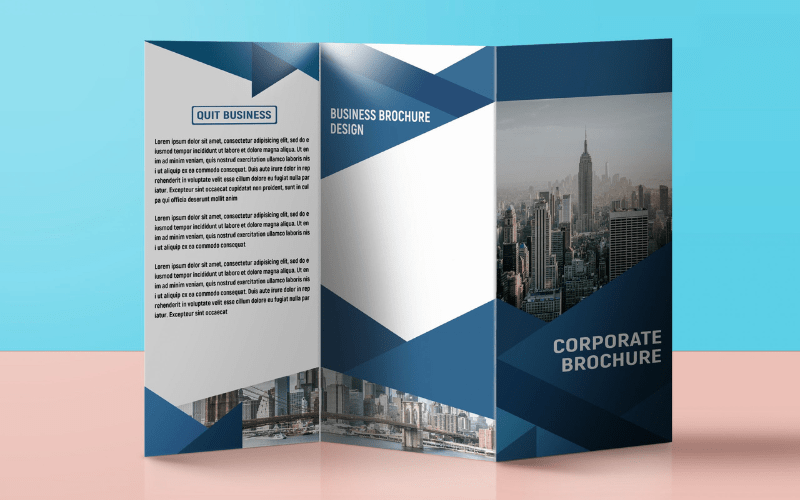
- Trifold: The folded size of these brochures is 8.5” x 3.67”. This fold option has 6 panels for categorized storytelling or step-by-step data.
- Z-fold: The folded size of these brochures is the same as trifold. They open like a zig-zag. You can choose this option for menus and maps.
- Gate fold: The folded size of the brochures is often 8.5” x 5.5”. It gives a dramatic opening effect. These are perfect for product/service launches.
Knowing the fold types properly ensures that you can fit your design correctly while avoiding panel misalignment.
Choosing Affordable Brochure Printing Services
To choose the right and affordable brochure printing services, you need to do a few things as follows:
- Compare online printing houses
- Ask about discounts in case of bulk printing
- Choose the right size and folds
- Ask for turnaround time
- Check proofs before printing
Understanding Brochure Printing and Design starts with knowing your content and choosing the right size for the brochure. It also helps you with choosing the right fold type. If done rightly, brochures can become one of the most effective marketing tools for businesses, irrespective of size and niche.